
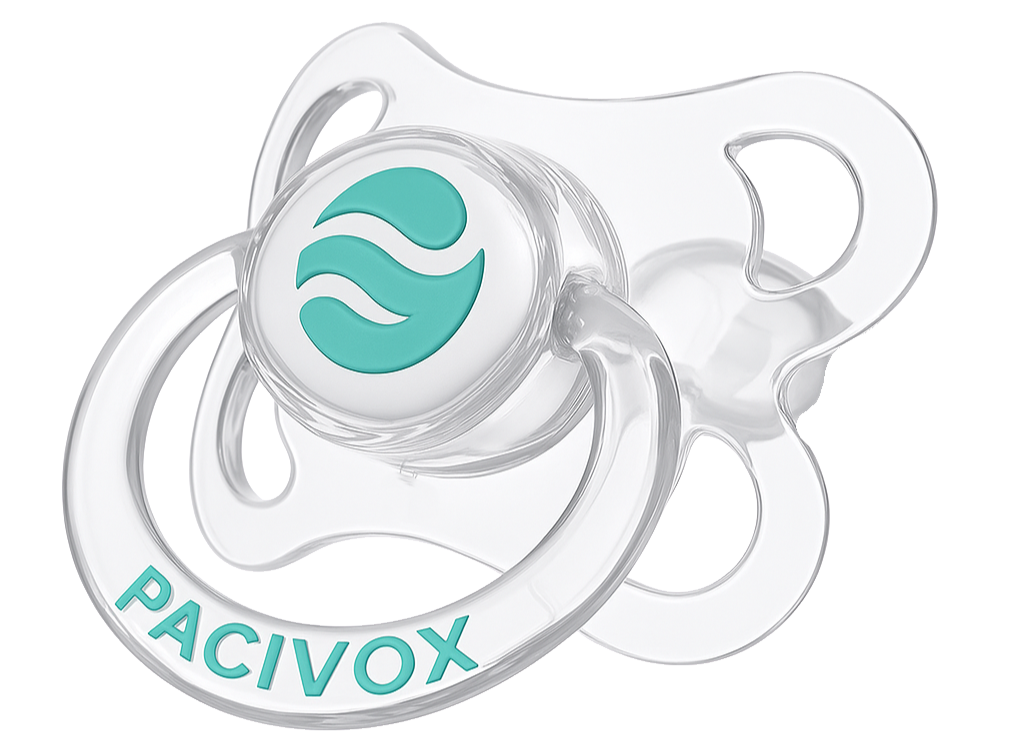
Pacivox is a myofunctional oral appliance for adults that promotes nasal breathing, helps reduce snoring naturally, and supports better sleep quality by minimizing teeth grinding (bruxism) and jaw clenching. Designed as an anti-snoring oral device and oral posture trainer, it gently guides the tongue, lips, and jaw toward a balanced resting position, encouraging healthier habits for calmer, steadier breathing.
Constructed specifically for adults, Pacivox works as a therapeutic oral appliance with a comfortable orthodontic-shaped design that adapts easily to different oral structures. Its non-invasive approach makes it a practical alternative to bulky CPAP machines or invasive treatments, allowing users to improve their oral posture and nasal breathing as part of a natural wellness routine. Myofunctional therapists and orthodontists may recommend Pacivox as a supportive tool within broader strategies for myofunctional therapy and long-term oral health.
The name Pacivox comes from two ideas: “paci,” from pacify—symbolizing calm, balance, and relaxation—and “vox,” the Latin word for voice, representing breath, expression, and vitality. Together, they reflect the device’s purpose: a simple, effective way to improve breathing, oral posture, and overall wellness.
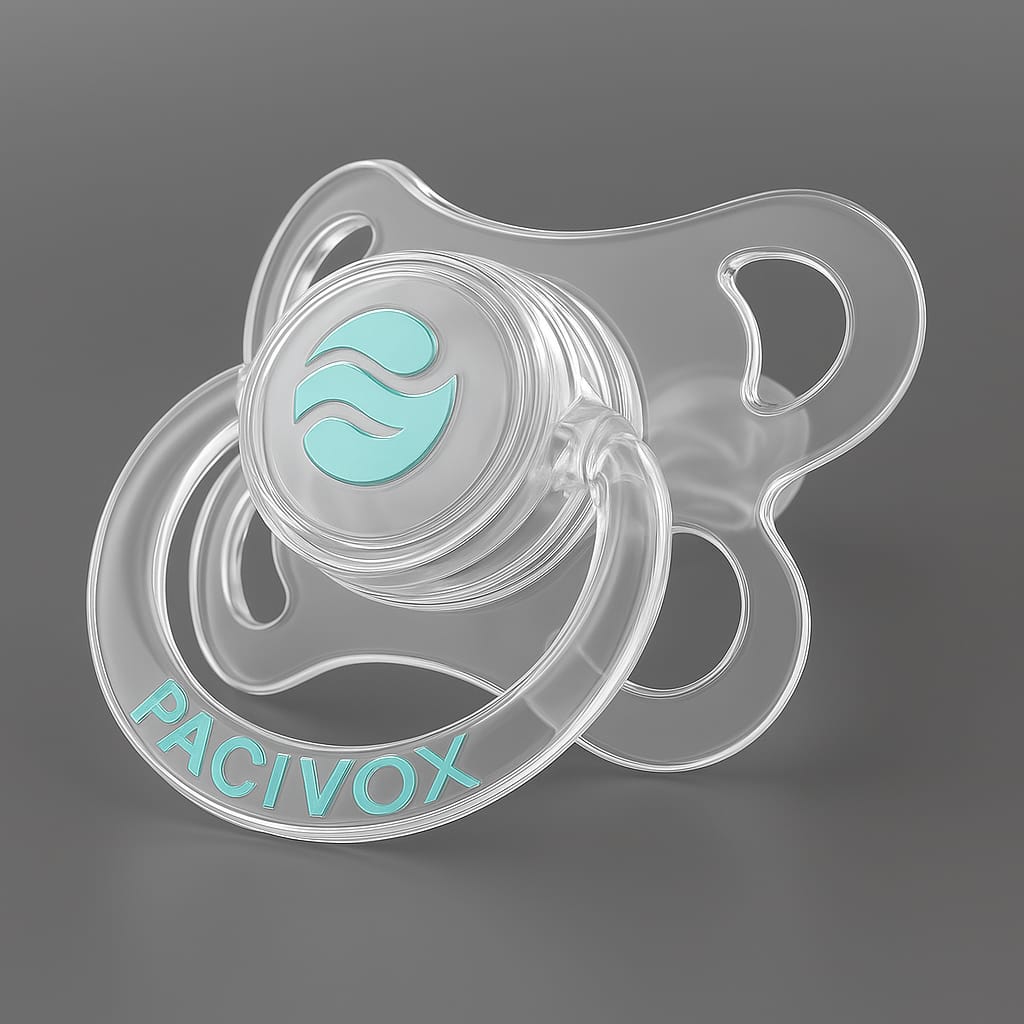
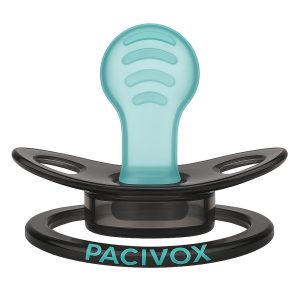
Pacivox is designed with an orthodontic-shaped bulb, similar to an adult pacifier but adapted for oral posture support.The bulb rests gently on top of the tongue, where its angled contour encourages the back of the tongue to stay slightly lowered while guiding the tip forward around the front. Because the tongue naturally curves, it conforms around the underside of the bulb, creating a more stable forward rest position. The bulb’s rippled surface provides texture and resistance, helping the tongue maintain contact and reducing the chance of sliding backward. This natural positioning allows Pacivox to function as an improve oral posture device and an effective nasal breathing trainer for adults, encouraging steadier airflow. The design also creates a small separation between the upper and lower teeth, making it useful as a stop teeth grinding oral appliance that discourages clenching and grinding during rest. By guiding the tongue forward, reducing oral tension, and promoting calmer nasal breathing, Pacivox works as both an anti-snoring oral device and a snoring reduction oral appliance, while remaining comfortable, discreet, and non-invasive to keep in place.
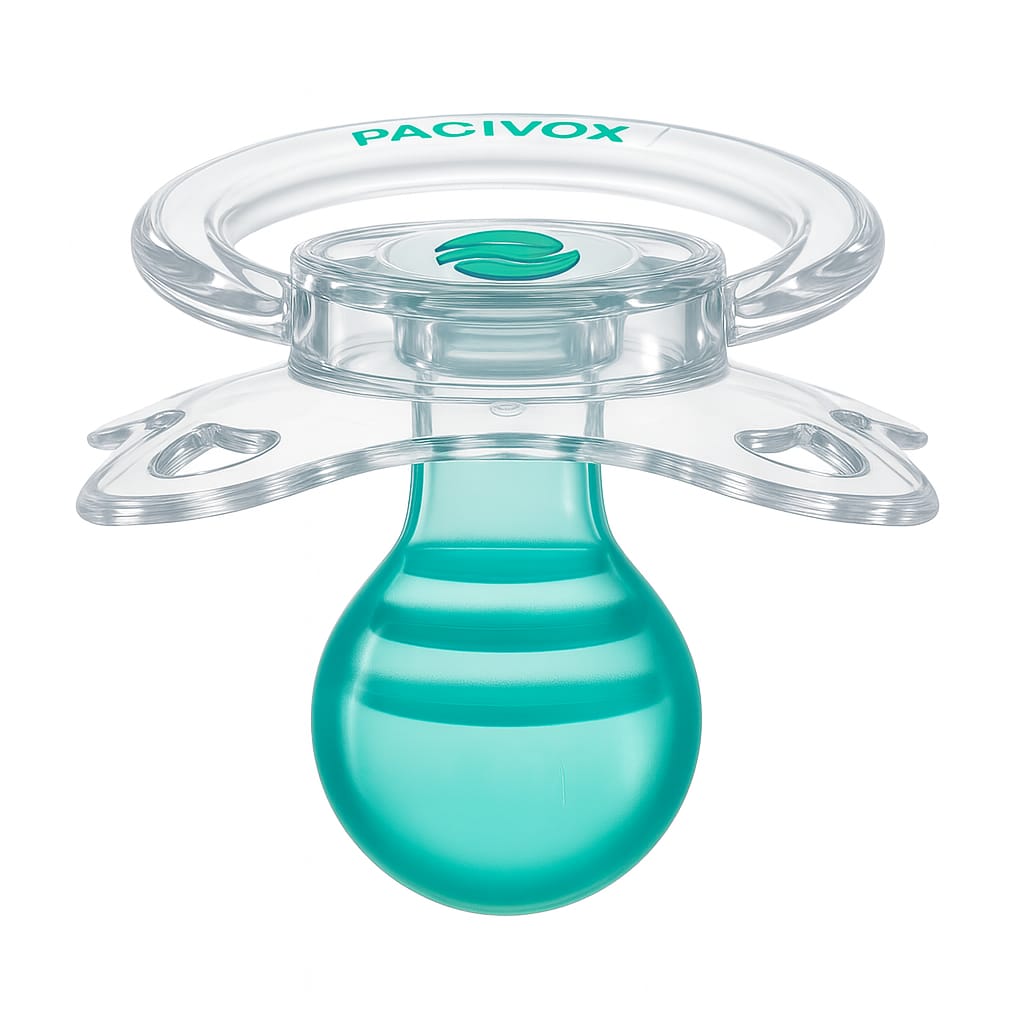
The Pacivox Myofunctional Trainer is a therapeutic oral appliance tailored exclusively for adult use to support rehabilitation of orofacial motor control. It functions as a nasal breathing device for adults, helping address functional impairments such as mouth breathing, inefficient swallowing, tongue thrusting, and challenges with chewing, speaking, or coordinated facial movement. The trainer’s bulb serves as a sensory tool that promotes correct tongue elevation and placement, helping to re-educate motor patterns essential for swallowing and speech.
A core application of this device is correcting dysfunctional swallowing sequences linked to imprecise tongue dynamics. In a clinical setting, it can assist with normalizing muscle tone, enhancing coordination among oral and facial muscles, and interrupting maladaptive behaviors like jaw clenching, teeth grinding, habitual tongue thrusting, or airway restrictions that may contribute to snoring reduction.
Clinicians often integrate the Pacivox Trainer into rehabilitation plans that involve speech therapy, orthodontic care, or physiotherapy. It fits seamlessly within Padovan myotherapy, a holistic framework developed by Beatriz Padovan, which rebuilds complex motor skills by reinforcing the foundational patterns of breathing, sucking, chewing, and swallowing.
Offered in a selection of adult-appropriate bulb sizes, the device also shows promise as part of rehabilitative regimens for neurologic conditions such as Bell’s palsy or post-stroke recovery, provided its use is supervised by a qualified healthcare professional.
Disclaimer: While the Pacivox Myofunctional Trainer has not been evaluated in clinical studies, its design and intended use are grounded in established principles of orofacial rehabilitation and myofunctional therapy. It should be considered a supportive training aid and applied under professional supervision as part of a broader therapeutic plan.
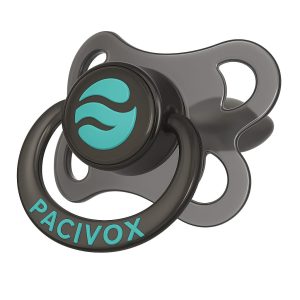
Pacivox is designed as an adult myofunctional trainer and myofunctional oral appliance, with a familiar form that is well-suited to gently guiding oral structures into balance. The shield provides external stability, while the ring allows for easy handling and consistent placement. The contoured bulb engages the tongue and lips in a natural, non-forceful way, offering subtle input that encourages healthier oral posture and more efficient breathing, functioning also as a nasal breathing device for adults. Its effect can be compared to compression socks: just as compression garments apply gentle, supportive pressure to pacify and stabilize the legs, this design introduces a calming, stabilizing influence within the oral airway, helping to reduce snoring and support overall oral comfort.
Many users describe experiencing greater energy, easier breathing, and a sense of calm after regular use of Pacivox. Reported benefits often include reduced snoring, fewer morning headaches, and less clenching or grinding of the teeth, which can ease tension in the jaw. Some users also note an improvement in overall comfort and circulation, which may be related to supporting more consistent nasal breathing and maintaining a stable tongue posture during sleep. By guiding the tongue forward, reducing backward drift, and limiting strain in the airway, Pacivox helps create conditions that encourage more restful sleep and a refreshed feeling upon waking.
How Pacivox May Help
Pacivox’s large shield naturally promotes mouth closure, which may encourage breathing through the nose. As a nasal breathing trainer for adults and a mouthpiece for nasal breathing, it supports proper tongue posture and guides the tongue into a more balanced resting position. Nasal breathing is commonly associated with improved air filtration, humidification, and pressure regulation within the respiratory system. It also helps balance oxygen and carbon dioxide levels in the blood—a process sometimes referred to as the Bohr effect—which supports more efficient oxygen delivery to the body’s tissues. Over time, this can contribute to a greater sense of comfort and ease in breathing.
Many users report experiencing more consistent energy and reduced fatigue, benefits that may be linked to the myofunctional oral appliance and its role in training proper oral posture. Together, these design features encourage habits that can make breathing feel more natural and restorative, while also acting as an oral appliance for snoring and a therapeutic device for myofunctional therapy, supporting healthier nighttime airflow and overall oral function.
Without Pacivox
Habitual mouth breathing may lead to dry mouth and less regulated airflow, which some people associate with poor sleep quality or morning fatigue.
Analogy
Breathing through the nose is like using a finely tuned air filter—it cleans, moistens, and regulates each breath. Mouth breathing, by contrast, is like leaving a window wide open in a storm—air rushes in quickly, but without control or protection.
How Pacivox May Help
By encouraging a closed-mouth posture and a more stable tongue position, Pacivox may help support smoother airflow and more consistent oxygen exchange during rest. As an adult myofunctional trainer and device for myofunctional therapy, it gently guides the tongue forward to reinforce proper oral posture and nasal breathing habits. Nasal breathing is commonly associated with benefits such as improved air filtration, humidification, and pressure regulation, all of which can make breathing feel easier and more efficient.
Many users report feeling more relaxed at night, more energetic in the morning, and experiencing less strain when nasal breathing and tongue posture are reinforced. These experiences also reflect how Pacivox, as an appliance to reduce sleep snoring and an oral appliance for snoring, can contribute to a greater sense of comfort, restored energy, and healthier nighttime airflow.
Without Pacivox
When airflow is disrupted by open-mouth breathing, it may feel less efficient. This can contribute to sensations of tiredness, dryness, or shallow breathing, which some users associate with lower sleep quality. Over time, unaddressed mouth-breathing habits may also reinforce oral strain rather than relaxation.
Analogy
Breathing with support is like running a machine with clean filters—low resistance, steady performance, and greater efficiency. Without that support, it’s like running the same machine with clogs and friction, where the system still works but feels less smooth and less restorative.
How Pacivox May Help
Unlike standard nightguards that still allow teeth to grind against a hard plastic surface, the Pacivox myofunctional oral appliance helps keep the teeth slightly apart. This spacing makes it harder to generate the pressure needed for clenching or grinding, addressing the habit at its source rather than simply cushioning the effects. The stop teeth grinding oral appliance also helps relieve muscle strain in the jaw and temples, which can lead to morning headaches, facial tension, and fatigue upon waking. Additionally, as a nasal breathing device for adults, Pacivox encourages healthier airflow patterns that can naturally reduce snoring while supporting a more relaxed oral posture during rest.
Without Pacivox
Traditional nightguards may still allow, or in some cases reinforce, clenching habits over time. Because the teeth can continue to press together on a hard surface, the muscles remain active, which may still contribute to headaches, tightness, or reduced energy levels in the morning.
Analogy
It’s like turning off the light switch entirely, rather than just dimming it. Pacivox reduces the opportunity for clenching and grinding to occur in the first place, rather than simply absorbing the force once it happens.
How Pacivox May Help
Encouraging closed-mouth breathing may support a calmer heart rate and smoother nighttime rhythms. Nasal breathing is often associated with more efficient oxygen exchange and steadier airflow, which can reduce strain on the body during rest. When breathing patterns are more consistent, the cardiovascular system does not need to compensate as much for fluctuations, contributing to a calmer rhythm overnight. Many users report fewer sleep disruptions, deeper rest, and more energy upon waking when nasal breathing becomes a regular habit. Pacivox, functioning as an oral appliance for snoring and a mouthpiece for nasal breathing, supports these healthy breathing patterns while promoting better oral posture and overall nighttime comfort.
Without Pacivox
Disrupted airflow or open-mouth breathing can sometimes feel less efficient. This may contribute to lighter, more fragmented sleep, which many people associate with fatigue, morning grogginess, or added strain on the body’s natural rhythms.
Analogy
Supporting your heart and breathing during sleep is like letting your car idle smoothly at night—steady and efficient—rather than sputtering and wasting energy due to poor fuel flow.
How Pacivox May Help
Pacivox’s bulb design encourages the tongue to adopt a forward and upward resting position, helping establish a balanced posture for the mouth and face. As an improve oral posture device and a device for myofunctional therapy, it gently guides the tongue to a stable position, which distributes pressure more evenly across the oral cavity and reduces unnecessary strain on the jaw and facial muscles. Over time, reinforcing this kind of oral posture is often associated with supporting facial balance, reducing tension, and encouraging more comfortable alignment.
Without Pacivox
Open-mouth posture or a low tongue position can place uneven load on the jaw and facial muscles, which some people find contributes to tension, discomfort, or gradual imbalance.
Analogy
Pacivox works like a gentle posture trainer for the mouth—helping the tongue and jaw stay in healthier alignment the same way a supportive seat helps encourage upright sitting.
How Pacivox May Help
Pacivox’s orthodontic-shaped bulb is designed to promote a natural tongue-up position, encouraging the tongue to rest gently against the roof of the mouth. The angled contour guides the tongue tip forward while the back of the tongue remains slightly lowered, creating a more stable oral posture. As an oral appliance for snoring and a myofunctional oral appliance, it helps prevent the tongue from drifting backward, which can contribute to smoother airflow and greater comfort during rest. This forward-upward tongue position is widely encouraged in myofunctional therapy and breathing practices, supporting proper airway openness, nasal breathing, and balanced oral posture over time.
Without Pacivox
When the tongue rests low in the mouth or falls back during rest, it may contribute to the sensation of restricted or uneven airflow, which many people associate with discomfort or restless sleep.
Analogy
Pacivox works like a gentle doorstop for the airway—subtly guiding the tongue into a position that helps it stay comfortably open during rest, without force or strain.
How Pacivox May Help
By supporting a closed-mouth posture and guiding the tongue into a more stable position, Pacivox may help minimize some of the mechanical factors that contribute to snoring, such as airway vibration and backward tongue drift. This can make breathing feel smoother and may contribute to fewer nighttime disruptions. Many users also report improved restfulness and a lighter, more refreshed feeling upon waking when snoring is reduced.
Without Pacivox
Open-mouth breathing and low or backward tongue posture can increase the likelihood of airway vibrations, often leading to more snoring, sleep arousals, and morning grogginess. Standard nightguards may protect the teeth but typically do not influence breathing or tongue posture, leaving many of these issues unaddressed.
Analogy
It’s like sleeping next to a quiet fan instead of a noisy generator—the calmer environment makes it easier to rest through the night.
Sleep Study Data
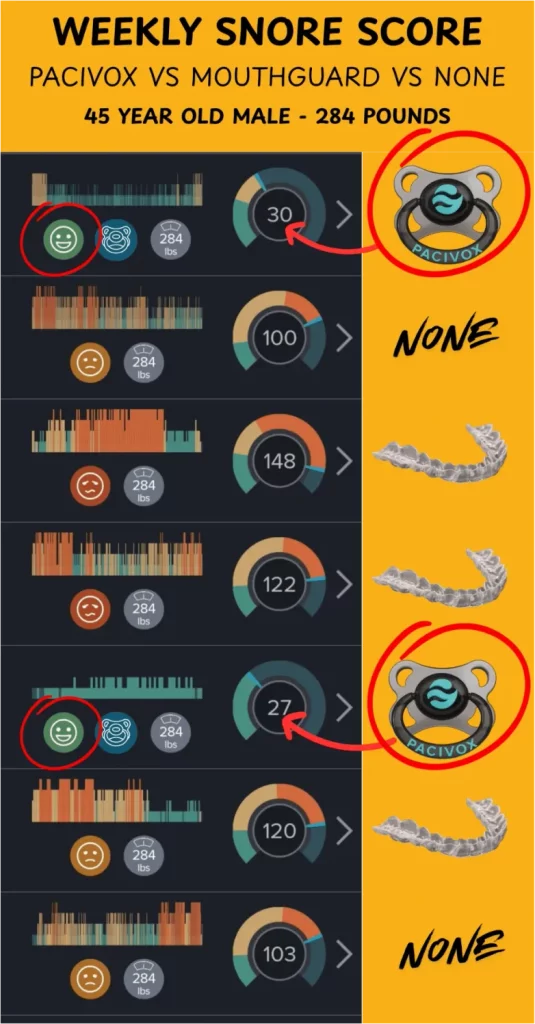
The chart below compares weekly snore scores from a 45-year-old male using Pacivox, a custom dental mouthguard, and no device at all over seven days. Lower scores indicate less snoring and fewer disruptions. With Pacivox, scores were consistently lower (30 and 27), compared to higher scores with no device (100, 103) or a professional custom mouthguard (148, 122, 120). This suggests that supporting closed-mouth breathing and tongue posture with Pacivox may contribute to quieter nights and more consistent sleep quality.
How Pacivox May Help
Tongue thrusting is a habitual pattern in which the tongue pushes forward against or between the teeth during swallowing, speaking, or at rest. The Pacivox myofunctional oral appliance can interact with this behavior by gently encouraging the tongue to rest upward against the palate rather than forward into the teeth. Its angled, contoured design provides a physical surface that mirrors the roof of the mouth, creating cues that increase awareness of tongue placement. By occupying space in the oral cavity, Pacivox alters the spatial environment, prompting the tongue to adapt by resting beneath or around it instead of projecting forward. This change in positioning may help reduce the direct forward pressure associated with tongue thrusting and can support nasal breathing patterns that encourage healthier airflow. While Pacivox cannot correct tongue thrusting on its own, it serves as an adult myofunctional trainer and a stop teeth grinding oral appliance when combined with professional guidance or exercises. In this way, the appliance functions as a tool to build awareness, reinforce proper oral posture, and may even help reduce snoring as part of broader myofunctional therapy strategies.
Without Pacivox
Without intervention, tongue thrusting often persists as a habitual pattern, with the tongue continuing to push forward against or between the teeth during swallowing, speaking, or rest. Over time, this repeated pressure can contribute to dental problems such as open bites or flared front teeth, along with related speech difficulties. Because the tongue remains low and forward rather than resting against the palate, oral posture and swallowing mechanics stay inefficient, and each swallow reinforces the incorrect pattern. Left uncorrected, the habit rarely resolves on its own and can compromise orthodontic outcomes or create long-term functional challenges.
Analogy
Managing tongue thrusting without intervention is like trying to fix your posture without a supportive chair—you keep slipping back into old habits. Using Pacivox is like sitting in a chair with proper support: it gives gentle cues that guide the tongue into healthier alignment instead of letting it drift forward.
For individuals recovering from Bell’s palsy, using the Pacivox myofunctional oral appliance may offer gentle ways to keep the lips, cheeks, and tongue engaged. Pacivox is primarily designed for passive use, where many of its benefits are seen: simply holding the device in the mouth may help support lip closure, lightly engage surrounding muscles, and provide ongoing sensory input. This passive stimulation can contribute to comfort, muscle tone, and gentle daily engagement. At the same time, Pacivox can also be used actively, functioning as an adult myofunctional trainer, where suction-based motions encourage movement in key muscles such as the orbicularis oris (around the lips), the buccinator (in the cheeks), and the tongue muscles that support suction and stabilization. These active exercises add light resistance and repetition, which may help maintain coordination and circulation in the facial area, while also supporting nasal airflow as a nasal breathing device for adults, potentially aiding better breathing habits. While Pacivox is not a substitute for professional therapy, it may also act as a stop teeth grinding oral appliance and provide gentle daily reinforcement that can help reduce snoring in some users.
For stroke patients, the Pacivox appliance offers value through both active and passive use. Actively, the suction action encourages forward and upward tongue movements and repetitive engagement of oral muscles important for swallowing and speech. This practice helps reinforce coordination, rhythm, and strength in areas often weakened after a stroke, while also supporting calmer, structured breathing. Passively, simply having the device in place may support lip closure, increase oral awareness, and reduce issues like drooling, improving comfort and confidence. Together, active and passive use of the Pacivox myofunctional oral appliance promotes both functional recovery and overall well-being, while naturally incorporating nasal breathing and reducing tension associated with teeth grinding.
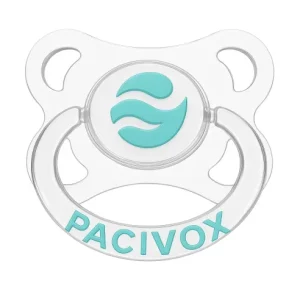
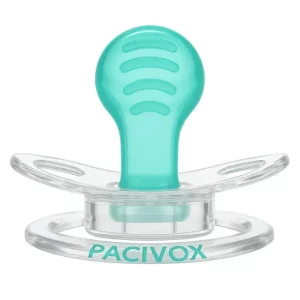
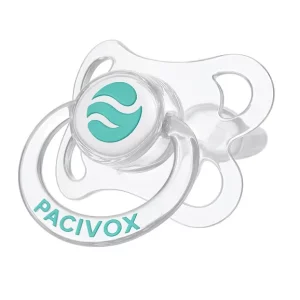

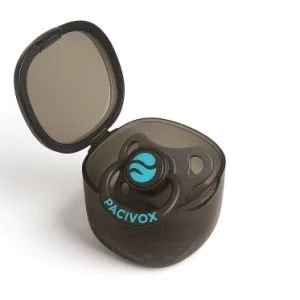
Wearing the Pacivox appliance during the day and overnight can provide continuous training for tongue posture, both during waking hours and throughout the longest uninterrupted period of rest — sleep. At night, the tongue often tends to fall backward or downward, especially in individuals with low tongue posture, oral habits, or airway concerns. Ideally, the tongue should rest against the roof of the mouth, with the front, middle, and back making broad contact with the palate.
When a pacifier-style bulb is in place, it rests on the tongue surface and acts as a physical cue. To stabilize the bulb, the tongue instinctively cups around it, drawing the front and middle portions upward and forward toward the palate. While the very back of the tongue may be pressed slightly downward, the forward lift of the tongue is reinforced, keeping it closer to the correct resting zone than it might otherwise be.
By supporting this more elevated tongue posture, the device may also help reduce tendencies toward open-mouth positioning and encourage nasal breathing. In some individuals, this shift can lessen the likelihood of snoring that arises when the tongue or jaw drops back during sleep. Additionally, when the correct bulb size and shape are used, the device physically prevents the teeth from making contact, which can effectively stop the grinding or clenching that typically occurs during sleep.
Importantly, the device does not replace natural tongue-to-palate contact but instead provides a training aid that conditions the muscles to rehearse the action of lifting and supporting an object in the correct area of the mouth. Over time, this repeated engagement may strengthen the tongue, build awareness, and reinforce muscle memory, making it easier for the tongue to maintain an elevated resting posture independently. During the day, this works actively by teaching the sensation of “up and forward” placement, while at night it works passively by reducing the tendency of the tongue to drop into low or backward positions, while also keeping the teeth separated to discourage grinding.
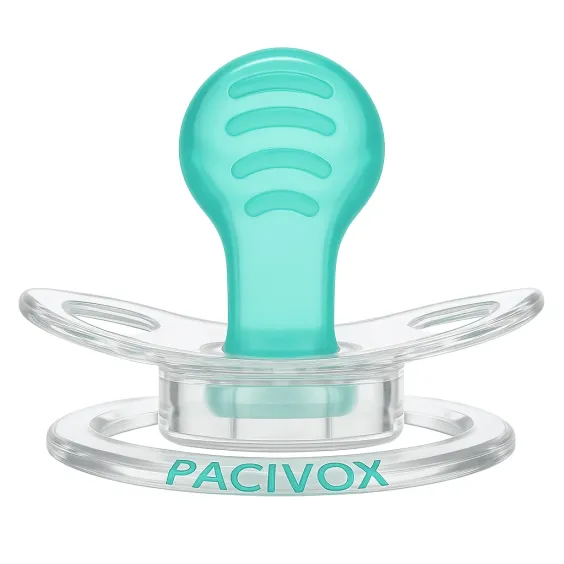
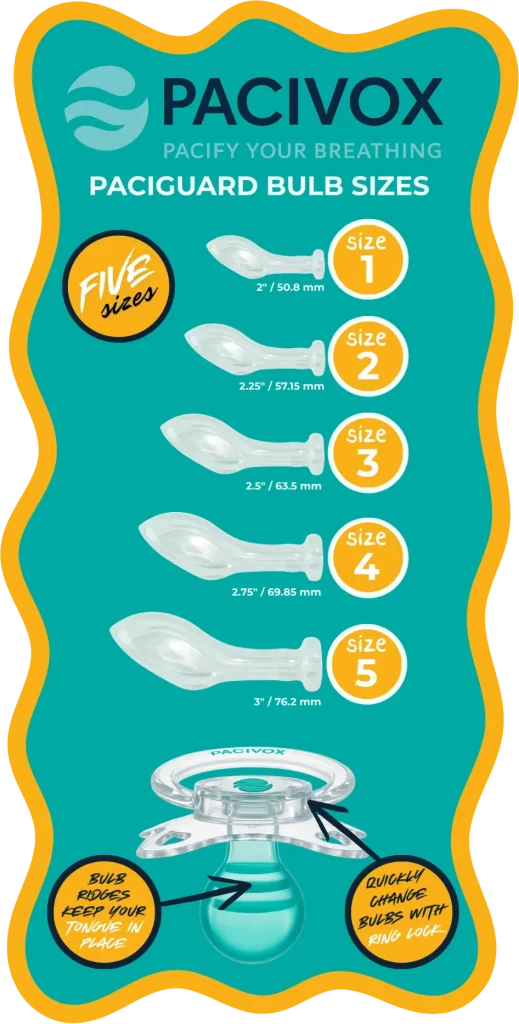
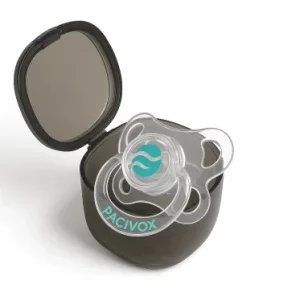
Every person’s mouth is different, with variations in tongue size, palate shape, jaw alignment, and bite affecting how an oral device feels and performs. Pacivox is unique because it offers a system of interchangeable Paciguard bulbs in multiple sizes and stem lengths. This allows users to try different options and select the one that feels most comfortable while providing the level of guidance they prefer. Smaller bulbs may feel lighter and less noticeable, while larger bulbs—with extended stems—can offer more surface contact and stability, which may be especially helpful for those with deeper bites or overbites. Because the bulbs can be swapped quickly, Pacivox gives users flexibility to find the fit that works best for their individual needs. This adaptability helps support a more personalized experience without requiring a one-size-fits-all solution.
No — Pacivox is not a medical device. It is a myofunctional oral appliance and adult myofunctional trainer designed as a supportive tool to encourage gentle, passive guidance of oral posture, tongue placement, and nasal breathing. While it is wellness-oriented and habit-building, Pacivox is not intended to diagnose, treat, or cure any medical condition.
Yes — Pacivox is designed to be comfortable and non-intrusive. Its smooth, lightweight, and carefully contoured design fits naturally in the mouth without applying force. The shield provides stability outside the lips, while the ring allows easy handling and positioning. The bulb engages the tongue and lips gently, supporting oral appliance for snoring, stop teeth grinding oral appliance, and nasal breathing device for adults, so most users quickly adapt and often forget it’s in place.
Pacivox may be used during nighttime or daytime routines, depending on user preference and tolerance. Users commonly wear the device for extended periods such as during sleep (up to approximately 7–9 hours) or for shorter daytime sessions (approximately 1–3 hours).
Daytime use may include periods of rest, such as naps, or while engaged in low-activity tasks like watching a movie, reading, or relaxing. Shorter intervals of use may also be appropriate, depending on comfort and individual needs.
Users are encouraged to establish consistent use patterns based on personal tolerance and in consultation with a healthcare professional if needed. The duration of wear should not cause discomfort, and use should be discontinued if pain, irritation, or other concerns occur.
Pacivox is not intended to be an adult pacifier. While the form may look familiar, the design has a very different purpose. Pacivox resembles an adult pacifier because that shape is well-suited to guiding oral structures into position. The shield provides external stability against the lips, the ring allows for easy handling and quick size changes, and the contoured bulb offers subtle engagement for the tongue and lips. Together, these features create a design that looks similar on the outside but works differently — Pacivox is meant to rest passively in the mouth and gently support balanced oral posture without requiring sucking.
Traditional adult pacifiers, by contrast, are primarily used for comfort or stress relief, often relying on the repetitive act of sucking to create a calming effect. Some adults use pacifiers to manage stress, reduce anxiety, or relax before sleep, and in that context they can serve as a helpful comfort tool. Pacivox, however, belongs in a different category — it is not made to be a comfort object, but rather a supportive training device for adults who want to focus on oral balance, breathing habits, and overall relaxation through posture.
The shield on Pacivox is designed to provide stability and prevent accidental swallowing of the device. The curved upper portion is shaped to rest beneath the nose, and the curved lower portion aligns above the chin, allowing the device to sit against the face. Vent holes are incorporated into the shield to permit airflow and user comfort. The shield also helps the device remain in position so that the bulb may engage the tongue and lips during use.
Pacivox has a ring because it’s the safest and most practical way to handle an intraoral device. The ring allows quick and easy removal if the user experiences discomfort, gagging, or airway obstruction, and it prevents the device from being pushed too far into the mouth. This design follows long-established safety conventions from therapeutic trainers, ensuring that the device can always be extracted rapidly, but it is not intended to resemble a child’s pacifier.
From a clinical standpoint, the ring also ensures a reliable grip during therapy sessions or at home. Unlike a smooth knob, which can become slippery with saliva and harder to grasp, the ring provides a secure hold even when wet. Because it floats freely against the lips instead of projecting outward like a rigid knob, it is less obtrusive during rest and generally easier to tolerate while sleeping. Just as importantly, the ring enables quick interchangeability of different bulb sizes, so users can select the fit that best supports their oral posture, comfort, and training goals.
Wearing Pacivox before falling asleep can help reduce the onset of snoring by setting the tongue and jaw into a healthier resting position before sleep begins. When people first drift off, the muscles of the mouth and throat naturally relax. If the tongue is already positioned low and forward at that moment, it is more likely to fall back or block airflow, which contributes to snoring. By contrast, when Pacivox is used in the 30–60 minutes leading up to sleep, it gently trains the tongue to settle upward against the palate. This makes it less likely that the tongue will collapse backward once the body relaxes, keeping the airway more open from the very beginning of sleep.
In addition, the device helps promote nasal breathing during this transition period. Establishing nasal breathing before sleep reduces mouth breathing, which is a common trigger for snoring. By reinforcing oral posture and tongue position ahead of time, Pacivox may prevent the early night airway vibrations that often set the stage for snoring episodes.
Pacivox is designed primarily for passive use, where it sits comfortably and guides oral posture without effort. Some users may instinctively suck on the bulb when they first begin using it, since the shape feels familiar and the action can feel calming. Gentle sucking can engage the lips and tongue more directly, which may help build oral awareness and reinforce positioning, but it isn’t required for Pacivox to work as intended. Most users naturally shift toward passive use over time, letting the device rest in place without effort. The main goal of Pacivox is to provide comfort and gentle guidance, not to teach or encourage a sucking habit.
Pacivox, like any intraoral device, has the potential to influence dental position over time. Prolonged or forceful use may contribute to unwanted changes such as tooth shifting, flaring, bite changes, or the development of malocclusions. Pacivox is intended as a supportive tool for oral posture and tongue use and is not an orthodontic or dental corrective device. Users should discuss potential risks with their dentist or orthodontist to determine whether the potential benefits outweigh the possible risks, and to ensure appropriate monitoring of tooth and bite health during use.
Yes — having a supportive partner can make a meaningful difference. Many users find it easier to stay consistent when their spouse not only encourages all-night use but also helps make Pacivox a natural and accepted part of the nightly routine. A simple glance or gentle reminder at bedtime can serve as a helpful visual check, reinforcing the habit without making it feel forced. Partners can also play an active role by encouraging the user to actually wear Pacivox during shorter “training sessions” in the day — while watching a movie, reading, napping, or relaxing together — so it becomes a regular part of daily life. Talking openly about the benefits noticed over time, such as more restful nights, waking up feeling refreshed, greater relaxation, or simply sticking with it, can be highly motivating for both partners. When encouragement is steady and supportive, Pacivox becomes more than a device — it becomes part of a shared journey toward better wellness, making it easier, more rewarding, and even more enjoyable to use.
Not at all. Pacivox is designed specifically for adults, with a clean, modern appearance that reflects its purpose as a wellness and training tool. Because it is usually worn at home — during sleep, naps, or quiet activities like reading or watching a movie — most people use it in private, where comfort and function matter more than appearance. In fact, many users report that once they experience the benefits of consistent use, any initial hesitation quickly disappears. Pacivox is not about style or fashion — it is about giving your body an easy, practical way to encourage balance, relaxation, and oral comfort. Far from being embarrassing, it’s something to feel good about using as part of your wellness routine.
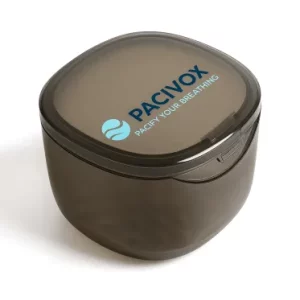
Pacivox should be cleaned regularly to keep it safe and comfortable to use. The easiest way is to wash it gently with warm water and mild, fragrance-free soap, then rinse thoroughly to remove any residue. Allow it to air dry completely before storing it in a clean, dry place. Avoid harsh cleaners, boiling, or dishwashers, as high heat and strong chemicals can damage the material over time. For best hygiene and performance, Pacivox should be replaced every few months, or sooner if there are signs of wear such as discoloration, thinning, or small cracks. The device was also designed so that the bulbs can be replaced on their own, allowing users to change sizes or swap out worn bulbs without needing to replace the entire device. To make daily care easier, the storage container includes a convenient wash tray where Pacivox can be rinsed, set to dry, and then stored — keeping the device both clean and protected between uses.
It’s acceptable to call Pacivox a “pacifier” or “your pacifier” when framed appropriately. The word comes from “pacify,” meaning to calm or soothe, which reflects Pacivox’s role in supporting balanced oral posture and relaxation. The comparison makes it easy to understand, but it’s important to distinguish that Pacivox is not a comfort object — it is a myofunctional trainer for adults, designed with function and wellness in mind.
Using the term “pacifier” can make the device approachable, but relying on its proper name, Pacivox, reinforces its purpose and avoids dismissive labels like “a thing” or “your thing.” In the end, “pacifier” works as a shorthand, but “Pacivox” best communicates its true value as a serious wellness tool.
While Pacivox may resemble an adult pacifier in shape, it was created with a completely different purpose and level of design. Many adult pacifiers on the market are cheaply made, intended mainly for comfort or stress relief, and rely on sucking to create a calming effect. Pacivox, by contrast, is engineered as a myofunctional trainer. Its bulbs are carefully designed in multiple sizes so that users can select the one that best engages their tongue, encouraging balanced oral posture without the need for suction. The shield adds stability against the lips, while the overall shape supports calm, consistent positioning. This makes Pacivox a supportive tool for posture and relaxation — benefits that traditional adult pacifiers are not designed to provide.
Wearing Pacivox during the day offers unique benefits beyond nighttime use. Short sessions while awake give the tongue and lips more opportunities to practice balanced posture, helping these positions become second nature over time. This kind of low-effort training builds awareness and consistency, so proper oral posture carries over even when the device isn’t in use. Daytime practice may also encourage more natural nasal breathing, since the tongue rests in a position that supports a calm, closed-mouth posture. In addition, using Pacivox while napping, reading, or watching a movie can make nighttime wear more comfortable by reducing adjustment time. Altogether, daytime use strengthens the habit and complements the benefits of wearing it overnight.
Disclaimer: The information provided is intended for general wellness purposes and should not be interpreted as medical advice. This product is not intended to diagnose, treat, cure, or prevent any disease. Always consult a licensed healthcare provider before starting any new health-related practice, especially if you have an existing medical condition.